Flexible Credentials
Depending on the selected readers and supporting hardware, users may enter with a card or key fob, PIN code, mobile app, Face Unlock, License Plate Unlock or Touch Pass on a compatible phone or watch.

R&R comes on-site to design, install and configure commercial door access systems for businesses across eastern and mid-Michigan. We bring together UniFi Access readers, key cards and fobs, compatible locking hardware, gate controls and the network infrastructure needed to manage who can enter and when.
Commercial access control is more than mounting a reader. R&R comes to your facility to review the entrances, plan the solution, install compatible readers and locking hardware, configure access permissions and integrate the system with its supporting network.
Instead of leaving your staff to figure out the installation and setup, we coordinate the physical door equipment and technology, then review how the system is used with your team.
Traditional keys provide entry, but they are difficult to manage as employees, schedules and responsibilities change. Keys can be copied, lost or left unreturned—and it is rarely clear who used a door or when.
Electronic access control lets you assign individual credentials, change permissions and disable access without rekeying the entire facility.
The right system should make daily access easier to administer while giving the business better control over sensitive or restricted areas.
Depending on the selected readers and supporting hardware, users may enter with a card or key fob, PIN code, mobile app, Face Unlock, License Plate Unlock or Touch Pass on a compatible phone or watch.
Control which doors or areas each employee, team or role is permitted to use.
Apply permissions by day and time so access matches an employee's role and working schedule.
Add, modify or disable access as employees join, change responsibilities or leave the organization.
Review recorded access events to better understand credential activity at controlled entrances.
Begin with the doors or gates that provide the greatest value and plan the system so additional areas can be considered later.
Apply electronic access policies to compatible vehicle gates as well as building entrances, including credential or license-plate-based entry where appropriate.
Plan access across different entry points and controlled areas using compatible hubs, readers, locks and gate equipment.
Electronic access often delivers the greatest immediate value at employee entrances, restricted rooms, inventory areas and vehicle gates where keys, codes or remote controls create management problems.
R&R reviews the facility, discusses how people move through it and helps prioritize a practical first phase. The design can account for future expansion without forcing the business to complete every door on day one.
R&R Technical Services provided an end-to-end commercial access-control solution for the Four Seasons Pavilion in Port Austin. Our work included credential readers, network equipment and infrastructure, system integration, and most of the electronic strikes across the project.
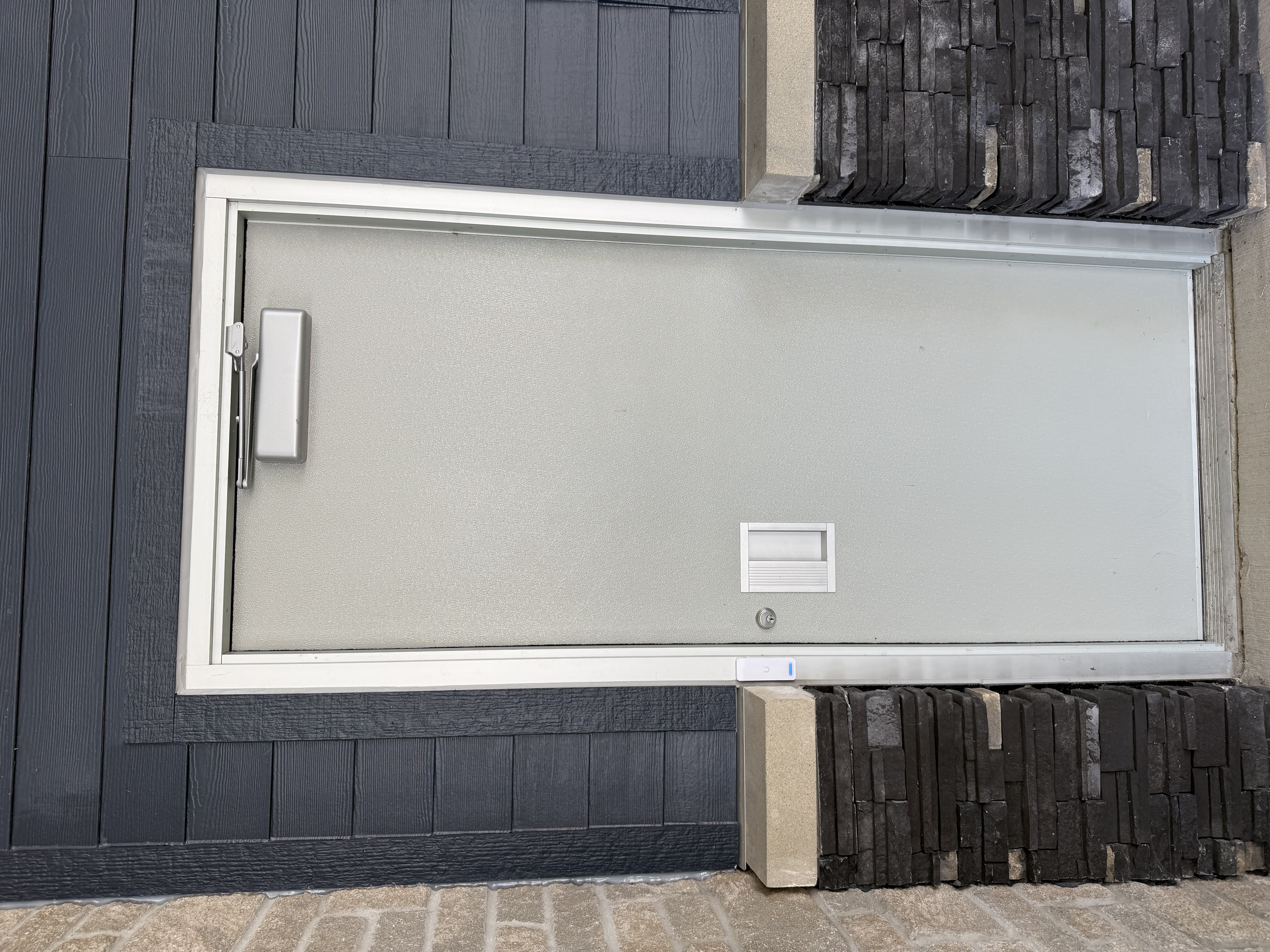
Electronic credential readers provide a manageable alternative to relying on traditional keys for facility access.
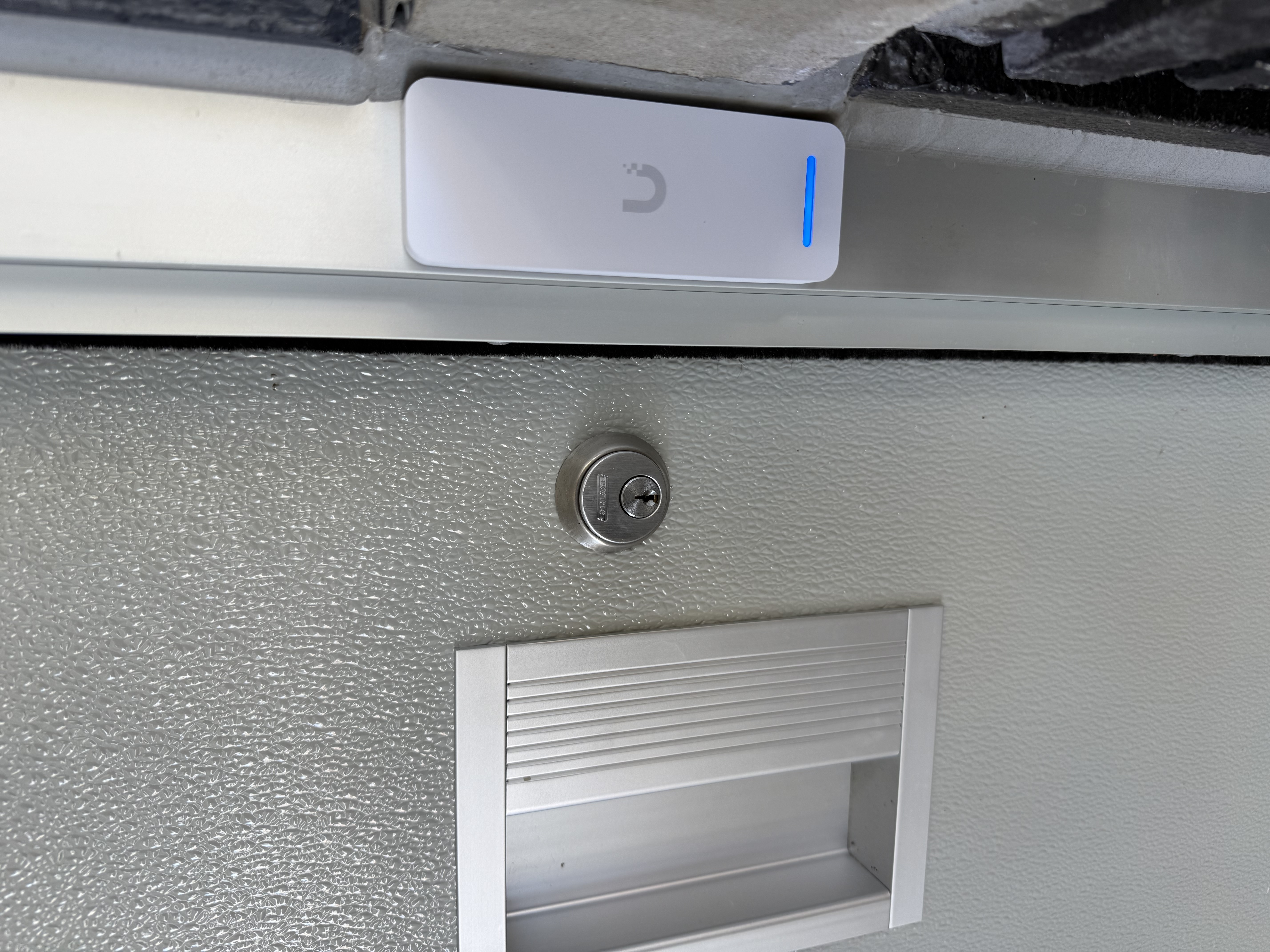
Readers were installed at controlled entrances as part of the facility-wide access-control design.
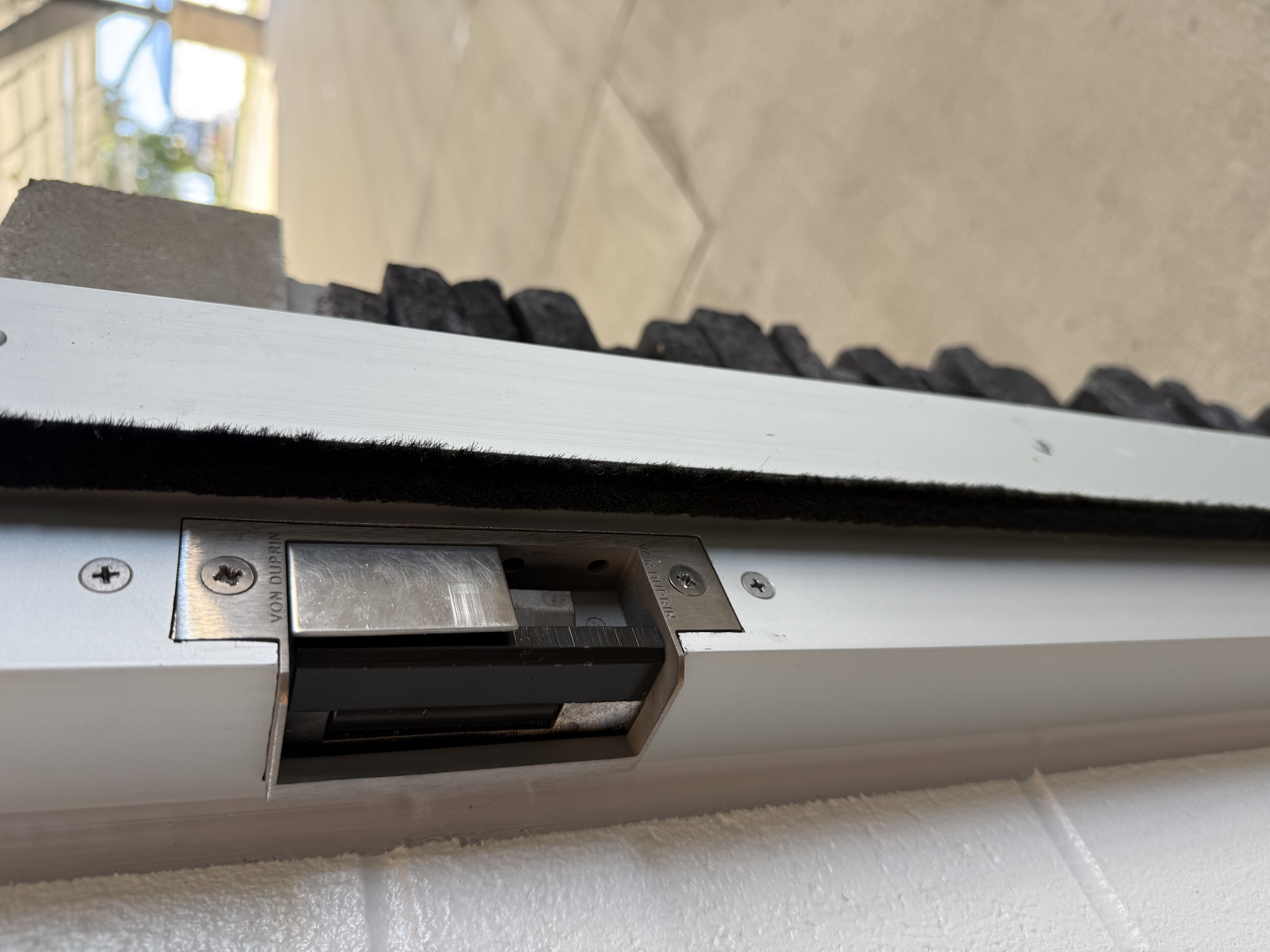
R&R installed most of the electronic strikes required to bring the controlled doors into the access system.
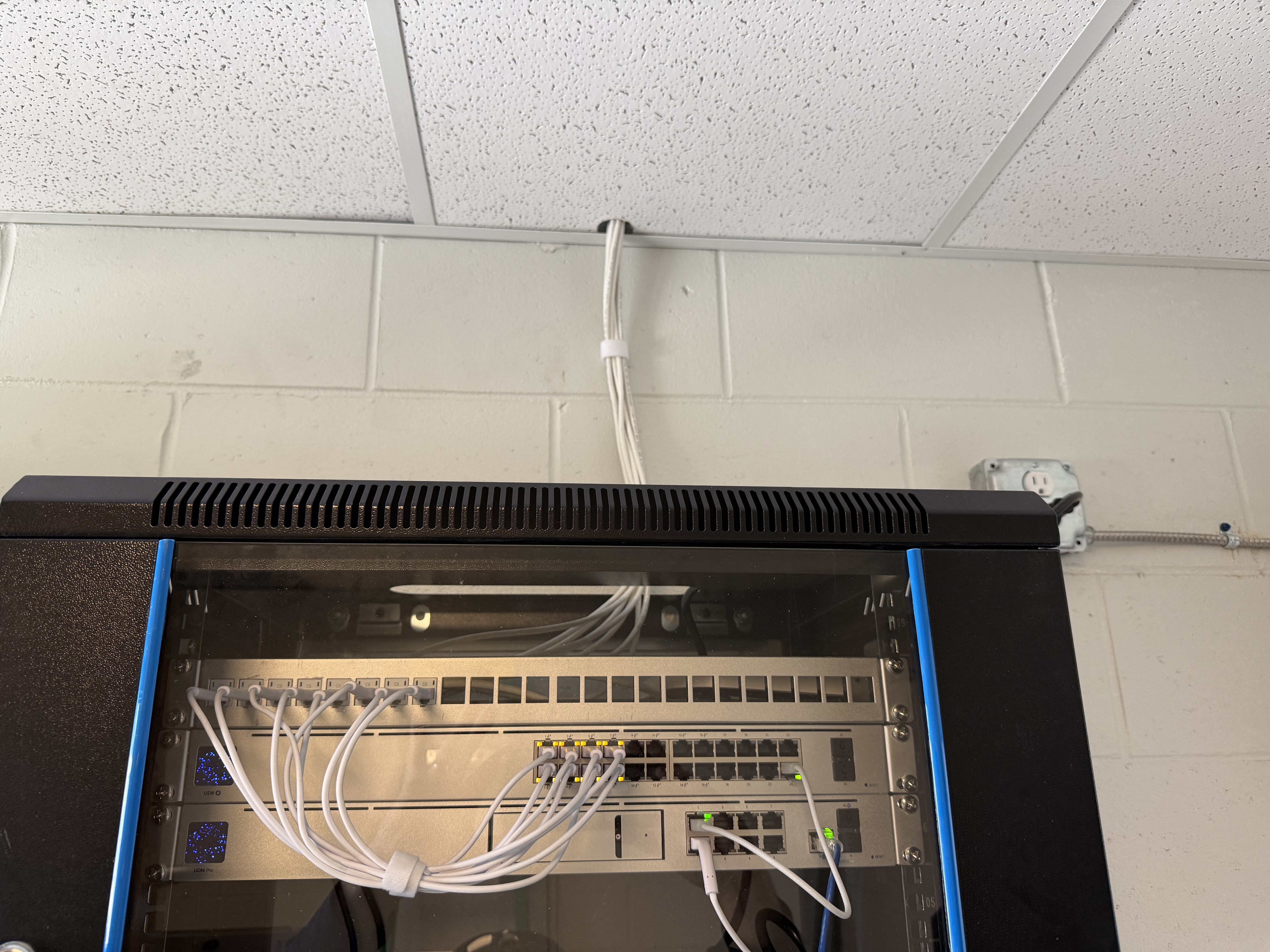
R&R supplied and installed the network equipment that supports the access-control environment, bringing the door hardware and technology together as one system.
See the Full Four Seasons Pavilion Project & Photos
A reliable installation requires more than selecting a credential. Door hardware, readers, controllers, cabling, power, network connectivity and management all need to work together.
Permissions and door priorities are planned around the way people actually use the building.
Cabling, power and network connectivity are considered as part of the access-control project.
Work directly with Randy to turn facility needs into a practical system plan.
Based in Caro and serving businesses throughout our primary and extended coverage areas across eastern and mid-Michigan.
Access events become more useful when related video and reliable network infrastructure are planned as part of the same environment.
Manage credentials, door and gate permissions, schedules and recorded access events.
Pair door events with video context to better understand activity around controlled entrances.
Explore Security Cameras →Build the cabling, switching, connectivity and power foundation modern access systems depend on.
Explore Networking →No. Many organizations start with the entrances or restricted areas that create the greatest management burden and expand later.
The employee's credential can be disabled without collecting or replacing every physical key associated with the controlled doors.
Yes. Permissions can be assigned according to the doors, roles and schedules appropriate for each person or group.
Yes. When compatible systems are designed together, video can provide additional context when reviewing activity at controlled doors or gates.
Yes. Compatible gate operators can be incorporated into an access-control system so authorized users or vehicles can enter according to the configured policies.
Options can include cards or key fobs, PIN codes, a mobile app, Touch Pass in Apple Wallet, facial recognition and license plate recognition. Availability depends on the system hardware and design.
Yes. We visit the facility, review the entrances, install compatible door readers and hardware, integrate supporting infrastructure and configure the access system for your operation.
R&R works throughout our primary and extended coverage areas in eastern and mid-Michigan. Projects beyond those counties can be discussed based on location and scope. View our coverage map →
Tell us where keys, codes or remotes create problems, which doors or gates require better control and how employees use the facility. R&R will help define a practical first phase.